Introduction
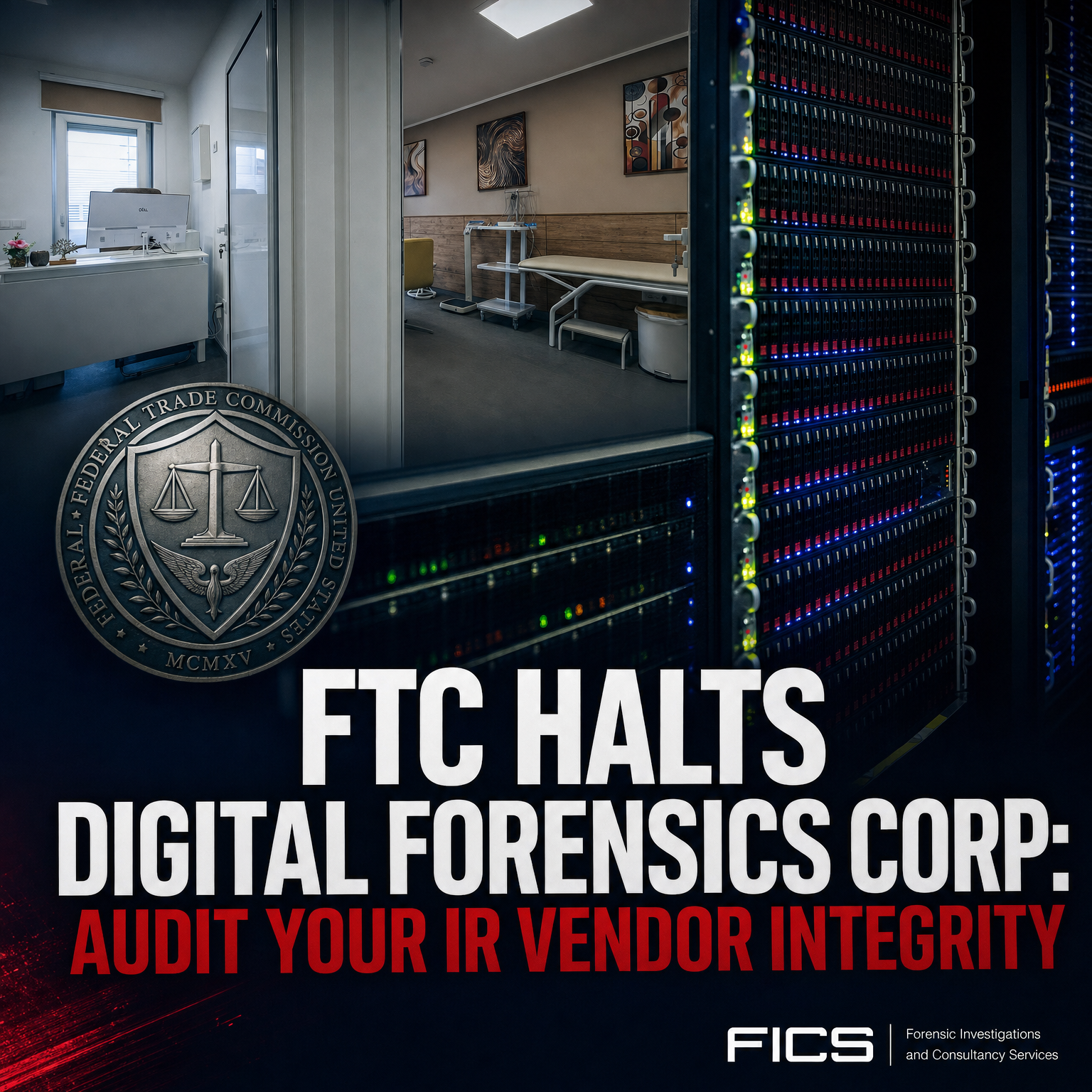
On October 13, 2026, the Federal Trade Commission announced a landmark enforcement action: a federal court order halting the operations of Digital Forensics Corporation, LLC. According to official court filings from the FTC action against Digital Forensics Corporation, the company engaged in deceptive tactics, overstated its investigative capabilities, and charged victims millions of dollars for services it failed to deliver.
Reporting from news outlets highlighted that the firm netted at least $60 million through fraudulent practices and misleading claims. For corporate counsel, CISOs, and risk executives, this enforcement action serves as a stark warning. The incident response (IR) industry is not immune to bad actors, and placing trust in an unvetted digital forensics partner can lead to severe legal, financial, and regulatory fallout.
Organizations must take immediate steps to evaluate their third-party forensics relationships. Relying on superficial credentials or aggressive marketing is no longer sufficient when court cases, corporate compliance, and multimillion-dollar liabilities hang in the balance.
Why the FTC Action Demands an Immediate IR Vendor Integrity Audit
The legal action taken by regulators against Digital Forensics Corp exposes a systemic vulnerability in enterprise cybersecurity governance. When organizations experience a breach, insider threat, or extortion attempt, they often outsource technical collection to external vendors under extreme pressure. If that vendor uses unverified forensic techniques or misrepresents its technical capabilities, the resulting evidence becomes entirely legally indefensible.
In court, evidence chain of custody and forensic methodology are subjected to intense cross-examination. If your vendor cannot demonstrate adherence to strict forensic standards, judges may throw out critical evidence. Furthermore, enterprise legal teams that submit compromised or fabricated forensic reports face severe judicial sanctions.
Evaluating external providers goes beyond verifying technical credentials. Organizations should regularly audit vendor supply chains to identify undisclosed corporate structures, conflict-of-interest risks, and fraudulent business practices that could undermine court testimony.
Red Flags That Highlight the Need for a Digital Forensics Vendor Audit
To maintain robust security and legal readiness, organizations must recognize early indicators of unethical forensic vendors. Fraudulent or predatory providers often share common operational patterns that signal poor methodology and dubious business practices.
- Guaranteed Specific Outcomes: No legitimate digital forensics examiner guarantees a specific legal or investigative conclusion before analyzing raw evidence.
- Opaque Chain-of-Custody Protocols: Vendors that refuse to supply itemized hash logs, raw memory images, or standardized evidence transit logs are a severe liability.
- Overreliance on Surface Logs: Unscrupulous vendors often rely solely on easily modified log files rather than comparing raw data sources. For example, understanding memory imaging versus network logs is critical when verifying whether records have been altered.
- Predatory Up-Selling: Charging aggressive retainer fees or locking clients into continuous payment tiers under the promise of "imminent threat resolution" indicates unethical business tactics.
- Unvetted Artificial Intelligence Usage: Providers using automated or generative tools without human oversight risk delivering hallucinated or flawed findings. Establishing rigorous expert witness AI audits ensures third-party analytics meet courtroom standards.
The Real-World Impact of Misleading Claims
When a digital forensics provider manufactures claims or misrepresents investigation progress, the harm extends far beyond financial loss. Organizations suffer compounding damages, including delayed incident mitigation, compromised regulatory disclosures, and ruined trust with shareholders. The FTC's enforcement demonstrates that regulatory agencies now actively target forensic firms that misrepresent their capabilities to consumers and commercial enterprises alike.
Actionable Steps for Incident Response Vendor Vetting
Protecting your organization requires establishing a rigorous, repeatable framework for incident response vendor vetting. Execute these five actionable steps to ensure your forensic partners maintain the highest standards of technical precision and legal integrity:
- Demand Standard Operating Procedures (SOPs): Require prospective vendors to submit written, peer-reviewed forensic workflows for disk imaging, memory capture, and cloud extraction before signing retainer agreements.
- Verify Examiner Credentials and Court Histories: Confirm that lead investigators hold recognized, verifiable certifications (such as GCFE, GCFA, or ENCE) and have verified experience providing expert witness testimony.
- Audit Evidence Handling and Cryptographic Hashing: Ensure the vendor generates cryptographic hashes (MD5, SHA-256) at the exact moment of acquisition and verifies them throughout the analytical lifecycle.
- Mandate Transparent Peer Review: Require that all technical reports undergo formal internal peer review by a secondary senior forensic examiner prior to client delivery.
- Establish Independent Technical Oversight: Periodically engage an independent, third-party firm like FICS to conduct a shadow audit of retainer vendors and validate raw forensic work product.
Conclusion
The FTC's court order halting Digital Forensics Corp operations marks a turning point in the oversight of cybersecurity and investigative services. It demonstrates that law enforcement and regulatory bodies are scrutinizing vendors who profit from misleading claims and substandard forensic methodologies.
Organizations must act proactively to defend their technical investigations and legal standing. Conducting a thorough digital forensics vendor audit protects your company from invalid evidence, wasted financial resources, and severe reputational risk.
By demanding total transparency, rigorous chain-of-custody protocols, and verified technical expertise, enterprise leaders can ensure their IR vendor integrity remains unassailable when crisis strikes. Contact FICS - Forensic Investigations and Consultancy Services today to review your forensic vendor partnerships and safeguard your incident response strategy.